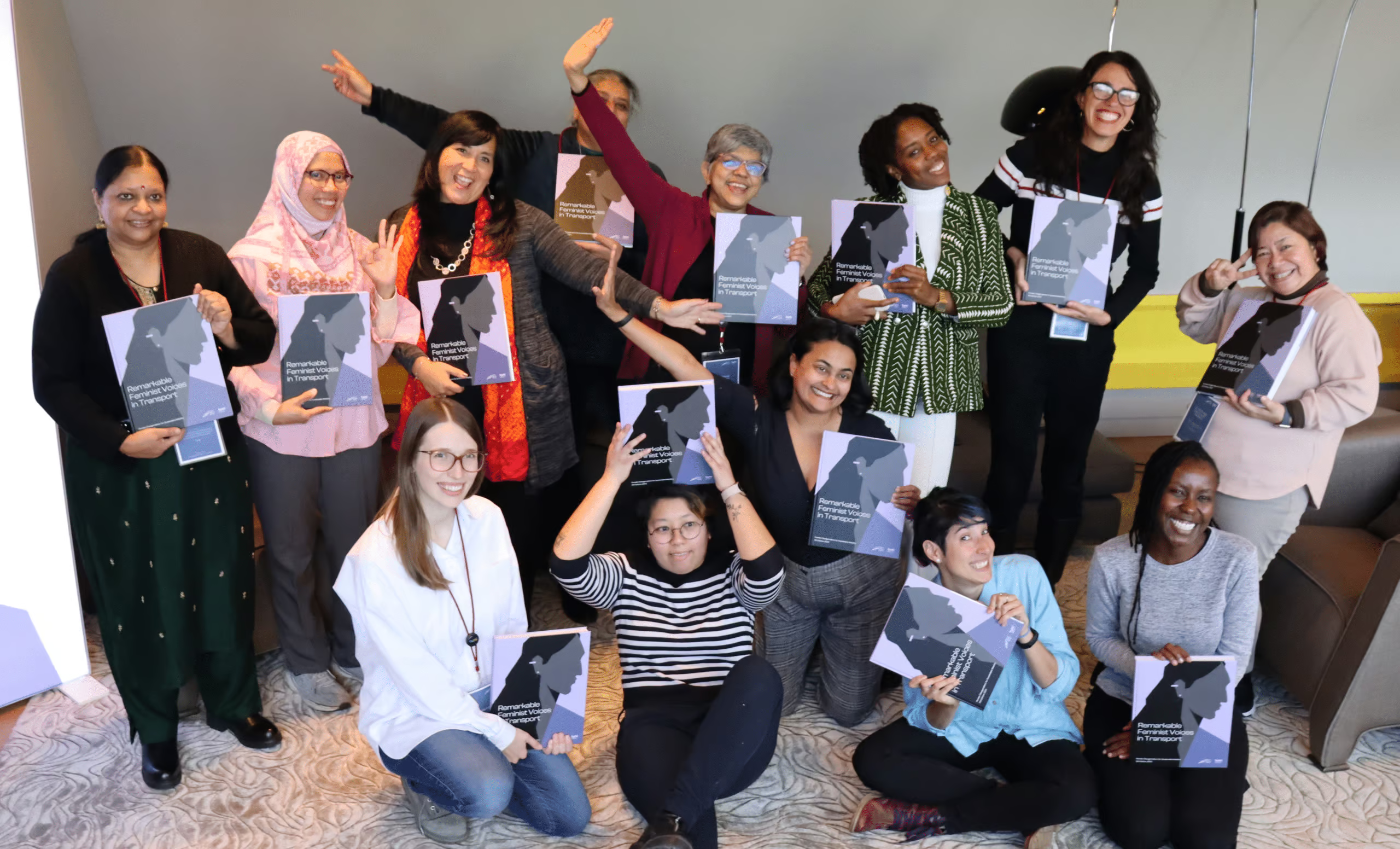
Leipzig is where Women Mobilize Women began. In May 2018, around 200 transport experts gathered here for the first global conference on women in transport, under one simple but unsettling idea: “When men plan transport, transport is planned for men.” Out of that day came a network, and out of that network came a global initiative, one that has since grown to include pilot projects, publications, mentorship programmes, and the Global Alliance for Feminist Transport, which WMW proudly serves as Secretariat.
Coming back to Leipzig in May 2026, for the International Transport Forum Summit, felt quietly significant. Eight years after that first gathering, we were back, and the room was full again.
A morning of connection
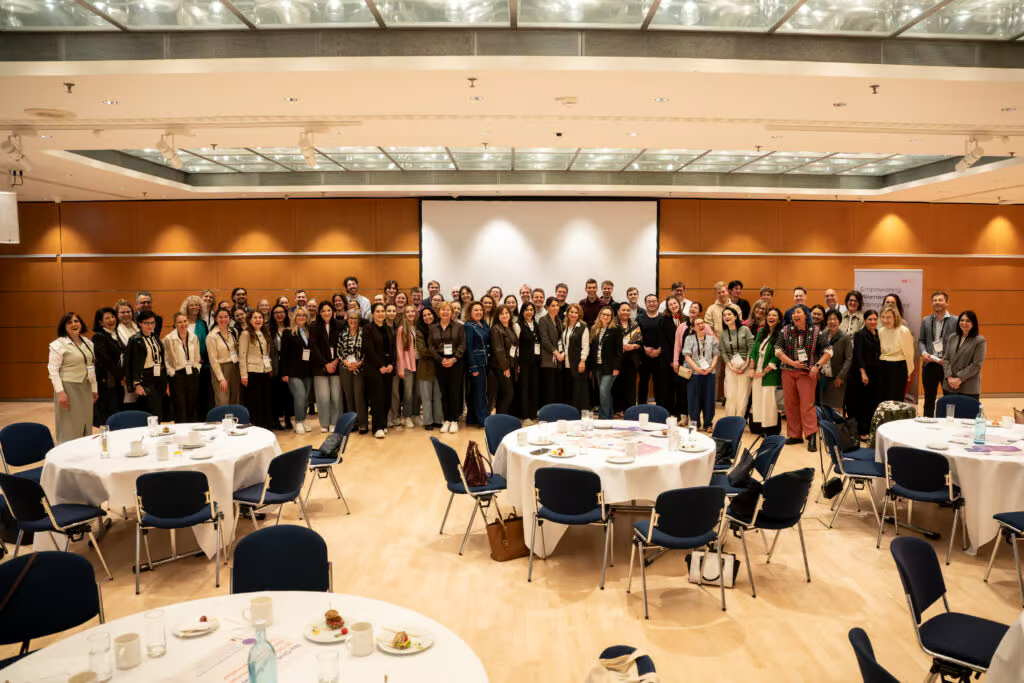
On 8 May, between 8 and 9am, around 90 to 100 people gathered for the Networking Breakfast: Women Leaders and Rising Talents in Transport. The session was co-organised by TUMI, GIZ, Women Mobilize Women, and the Global Alliance for Feminist Transport, in partnership with the International Transport Forum.
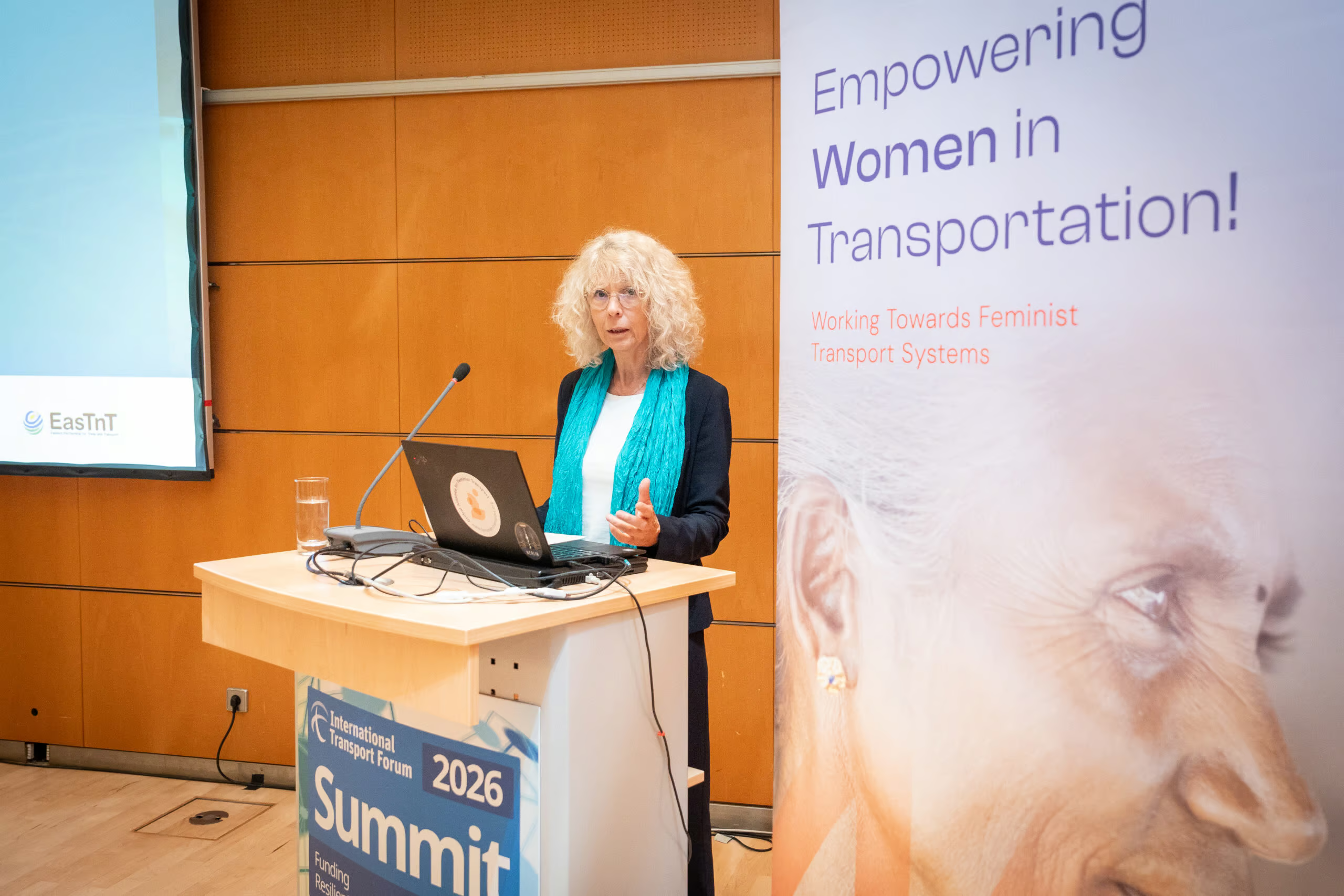
Role models, mentorship, and networks play a crucial role. Seeing diverse leadership journeys helps open doors and expand what is possible. The connections formed in spaces like this can support careers, foster collaboration, and drive lasting change. […] Gender equality and youth empowerment are not side issues — they are at the heart of effective international cooperation.
Dr. Evita Schmieg, Head of the Department for Energy, Urban Development and Mobility, Federal Ministry for Economic Cooperation and Development (BMZ)
The room brought together people who would not normally share a table: students from Saxony and Berlin sat alongside senior policymakers, the EasTnT delegation mingled with cycling advocates and walking researchers, and freight forwarders compared notes with road safety specialists. All in one room, across sectors, generations, and countries, before the rest of the day at the summit had even begun.
Ten paths, one room
The format was deliberately open. Rather than panels or presentations, speakers were invited to share their own stories: how they entered transport, what they faced, and what kept them going. The lineup brought together women working across very different corners of the sector, and that range was the point.
- Raquel Barrios, YOURS
- Yuliya Bilous, Women in Transport Leadership
- Ana Nikabadze, Batumi Cycling Network
- Sabina Tanriverdiyeva, Women in Transport Azerbaijan
- Kristine Yeremyan, E-Logi Fest
- Emma MacLennan, EASST
- Magda Olczak, International Transport Forum
- Keisha Alena Mayuga, TUMI Just Mobility
- Bronwen Thornton, Walk21 Foundation
- Bessie Noll, ETH Zürich
From cycling infrastructure in Georgia to e-logistics in Armenia, from walking advocacy to academic research, each speaker offered a different answer to what a career in transport can look like, and what it takes to lead within it. The storytelling format gave the session its texture, and feedback afterwards was overwhelmingly warm, with one recurring note: it should have been longer.
[smartslider3 slider=”2″]Amplifying voices from the sector
Alongside the session, the Global Alliance for Feminist Transport filmed a series of short interviews with women at the Summit, asking them what it is really like to work in transport. What came back was candid, personal and often quietly powerful: stories of being the only woman in a ministry, of proving yourself twice as hard, of finding mentors who showed you that you could be driven and still be kind. And of what feminist transport actually looks like beyond the policy language: your grandma getting to the supermarket, your kids cycling to school, people with disabilities getting to work without obstacles.
One thing came through in almost every conversation:
We need to give the next generation of women in transport the microphone. Give them the microphone, give them the voice, give them a seat at the table. Listen to them.
Keisha Alena Mayuga, WomenMobilizeWomen Co-Lead
Watch the full interviews:
You are currently viewing a placeholder content from YouTube. To access the actual content, click the button below. Please note that doing so will share data with third-party providers.
A partnership that keeps growing
This session is also a reflection of a collaboration that has been building for years. TUMI and the ITF have worked together consistently to move gender inclusion up the global transport agenda, and the 2026 breakfast is one expression of what that looks like in practice. Jens Giersdorf, Head of TUMI Management, shared his perspective on the TUMI and ITF partnership on gender and what it means for the years ahead.
You are currently viewing a placeholder content from YouTube. To access the actual content, click the button below. Please note that doing so will share data with third-party providers.
What participants took away
At the end of the session, participants were asked what it had inspired them to do. The responses were personal and direct, no policy language, just people saying what had actually landed for them.
Keep a gender perspective as a professional in transport.
Create opportunities for young professionals.
Put my knowledge at the service of younger generations.
Work harder on seeking women role models.
Broaden my horizons and see transport as a social subject.
Join the Global Alliance for Feminist Transport.
Connect with people in my field from other countries.
Not give up.
That last one is worth sitting with. For many women navigating a sector that still puts up real barriers to entry, retention, and progression, staying in the room is its own kind of persistence. The fact that a one-hour morning session could remind someone of that is not a small thing.
What comes next
In the days after the summit, new experts signed up to the Global Alliance for Feminist Transport. The ITF has expressed real interest in co-organising again, ideally at the start of the next Summit rather than the end. People stayed long after the hour was up, still talking, still exchanging contacts. One hour, it turned out, was nowhere near enough, and that feels like the best possible reason to keep going.