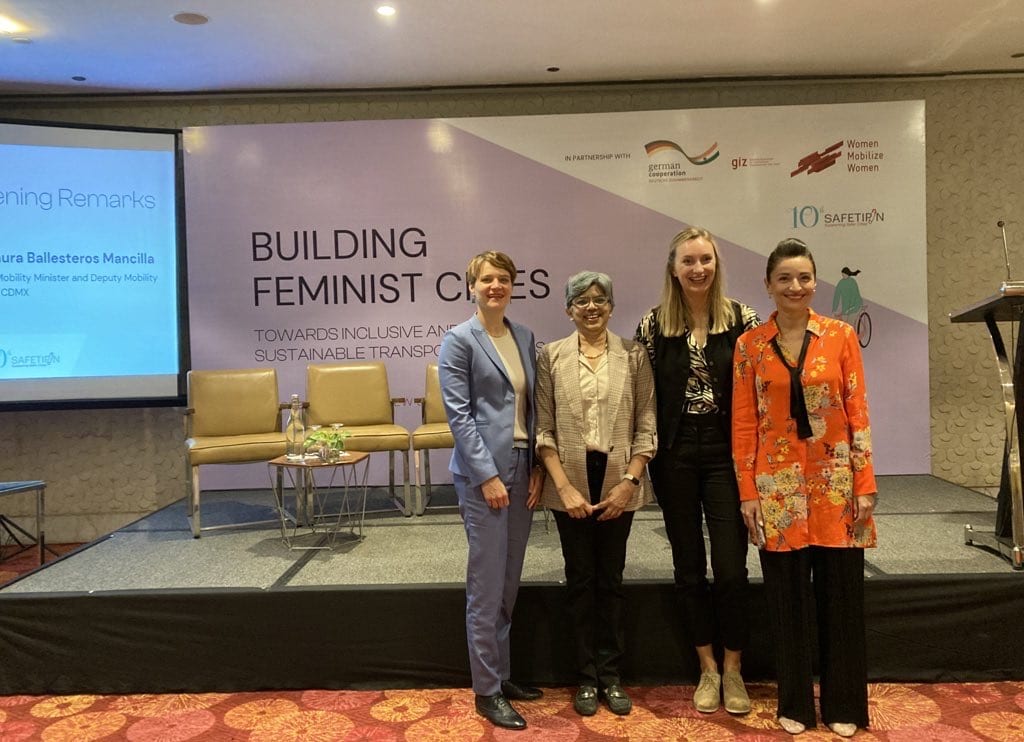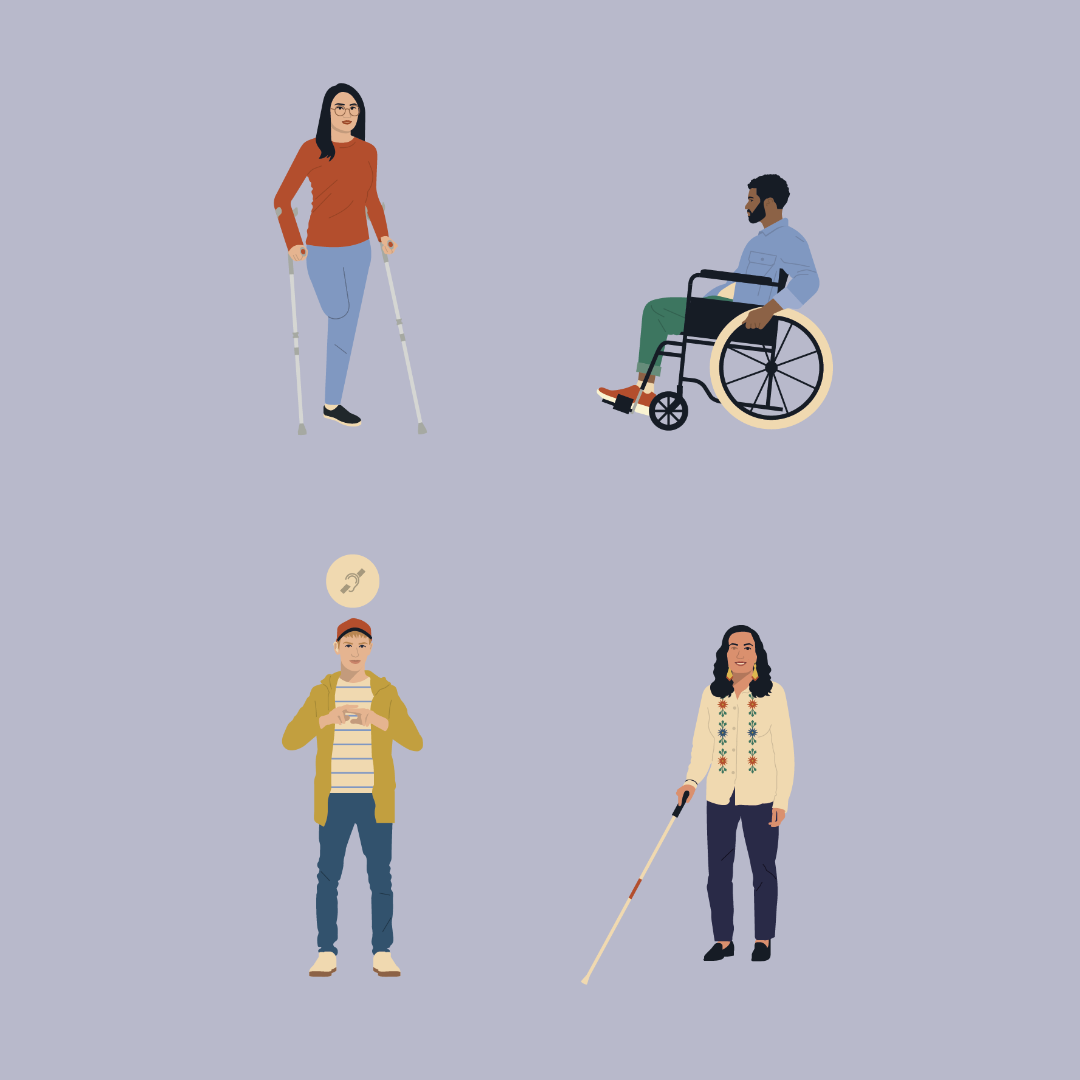
Current research on gender and mobility is moving beyond documenting inequalities toward actionable, impact-oriented knowledge with communities that have historically been overlooked in transport planning.
During December 2025, we had the honour to hear from female researchers pushing the gender in mobility agenda forward: The MobiliseYourCity team held a webinar series “Cities that Move with Equity” explained why gender should be embedded in transport policy (watch them here, and here). A few days later, the Global Alliance for Feminist Transport hosted two meet and greet sessions to learn from colleagues in academia. We were delighted to see their contributions to a growing base of literature to advocate and build more equal and safe transport systems for all.
The core topics discussed were new participatory tools to inform decision-making; insights into the mobility experiences of the LGBTQI+ community; and care-related mobility and infrastructure design. Across all of them, a shared focus has been found: building actionable knowledge that can inform real life decisions in our cities.
Get to know the latest research topics on gender and link up with our featured researchers if you want to find out more and collaborate.
Digital participation tools to inform decisions
For years now we have started building guidelines to design cities with a broader perspective of users and their needs (inclusive street design). As it is usually noted in them, to truly build inclusive cities, we need to move from the “neutral user” and learn from people’s lived experiences. However, collecting this knowledge requires resources sometimes city officials do not have. Two colleagues are currently leveraging digital tools to overcome this barrier and translate lived experience into planning-relevant data.
Megha Tyagi has 10+ years of academic and consultancy experience, focusing on gendered experiences in transport and mobility across Asia and Europe. During her PhD research, she discovered that Indian children’s everyday mobility within their neighbourhood is largely characterised as dependent and motorized, with a significant correlation to both built and social environments. Compared to boys, girls exhibit higher levels of dependency when travelling to school and other local destinations. Read it here.
With the goal to explore the potential of an innovative digital participatory tool (developed in Finland) to amplify children’s voices in shaping walking infrastructure, she is currently engaged in a Marie Skłodowska-Curie Actions (MSCA) funded post-doctoral research project at Aalto University. The project aims to co-produce knowledge with children to prepare “Walk Plans” using SoftGIS methodology, for the first time in Delhi, India. This participatory tool seeks to capture children’s lived experiences on streets and immediately translate them into aggregated statistics and maps that saves time and work as a new valuable resource for planners to inform decision-making. Learn more about Megha’s research here and here.
Reena Mahajan is an urban planner and architect based in Paris and founder of Studio DiverCity. She has over 20 years of international experience working at the intersection of urban design, gender equity, climate resilience and cultural change. While living in Montevideo, she led #MontevideoPacificada, a road-culture awareness campaign that contributed to a wider public debate and supported the design of safer intersections and new cycling infrastructure. Read more here.
From this experience she recognised that urban change is not only technical but cultural. She is currently developing StreetSmart, a civic-tech platform that converts street photos and lived experience into liveability insights that can inform planning and decision-making. The platform has been piloted in Delhi, with future pilots planned in Paris and other cities. Find out more here. See also her educational videos as part of the series See Your Street Differently here.
The alignment between Reena’s and Megha’s work can only be seen as positive: it clearly shows the shift towards more participatory tools to model decision-makers’ paths.
New insights into the travel experiences of the LGBTQI+ community
Even though we have made significant progress on research that focuses on the experiences and need of women’s travels, there is almost none done with an LGBTQI+ perspective. These researchers show a changing point in academia by expanding gender and mobility research through a queer lens.
Kirsten Tilleman has 10 years of experience as a consultant to US transport agencies and is currently doing her PhD on evolving barriers to safety for cisgender and transgender women, as well as gender expansive people on public transport. Her research focuses on harassment prevention and inclusive security strategies. She has previously done a systematic literature review on the topic (Read it here).
Following up on this, in her most recent research she presents results from focus groups and interviews with LGBTQI+ women (cis abd trans) and non-binary individuals living in Auckland on their experiences on public transport (PT) journeys and their visions for change. This is a substantial source of knowledge on these historically overlooked groups’ needs for safety measures. The analysis concludes that “a safe and secure PT system is community-based and PT-authority-enabled through coordination across internal and external stakeholders, adequate resourcing scaled to the PT system and assets, and visual and cultural representation of the ridership community.” Read her research here.
Juliana Betancur Arenas has 8 years of experience in sustainable mobility across Latin America and Europe and she currently coordinates a research collective focused on just decarbonisation and conducts research on queer mobilities and cycling from a gender perspective. Charlotte van Vessem, a PhD researcher in gender, accessibility, and urban mobility in Brussels. Their collaboration came from while doing their master’s theses on gender and mobility, where they both noticed the significant lack of LGBTQI+ perspectives in studies on daily mobility.
They have a research grant from the Brussels Centre for Urban Studies to conduct a research project on Queer Mobilities. They held focus groups and interviews with queer participants in Brussels in different languages and parts of the city, ensuring representation from different sociodemographic groups. Their results shed light on the array of thought and decisions this community takes, on a daily basis, before making a trip: from clothes, mode of transport, times, and routes chosen (Read more here and here). The study highlights the role of intersectionality in mobility possibilities, and of social networks to improve their sense of security, aligning clearly with Kirsten’s study findings.
Impacts on mobility possibilities and gender on job positions
Miriana Vignetti and Arianna Vignetti work at Road to 50% in Rome, promoting women’s participation in decision-making and leadership roles. With this goal, they have analysed the role of transport in women’s opportunities and barriers.
By analysing data on Italy’s working population and their commute times by transport mode, they wanted to see whether commute time penalizes women by reducing their probability of being in high occupational categories. Their findings show that commute time does not act as a structural barrier to higher job positions for men as it does for women. Crucially, commuting acts as a structural barrier on women’s career advancement, while men’s occupational outcomes remain largely unaffected by commute length or mode. The confirms the existence of a gendered “commute penalty” embedded in transport systems. Read it here and read more about their work at Road to 50%.
Mobility of care
Care-related travel has become a central topic in gendered mobility research over the past decade, since Sánchez de Madariaga coined the term “mobility of care” in 2013 (Read here). Recent feminist research keeps filling the gap of knowledge with evidence from cities worldwide. They also strengthen new frameworks on transport infrastructure, moving from a materialistic approach to a systemic one, focusing on its interrelation with social networks.
Andrea Navarrete Mogollón is a gender and social inclusion consultant with extensive experience in the public sector, including her roles as Bogotá Bicycle Manager and as Gender and Safety Strategist at TransMilenio S.A. She specializes in people-centred, inclusive and care-oriented approaches to transport and urban systems, with a focus on active mobility, safety and public space. She is currently pursuing a PhD in Engineering with a focus on transport at Universidad de los Andes (Bogotá).
Through a comprehensive literature review, she shows how feminist transport research reframes infrastructure beyond physical assets. Care-oriented approaches emphasize proximity, time savings, accessibility, and risk reduction, challenging evaluation models that prioritize construction over service provision and lived outcomes. Find out more on her blog.
María Fernanda Rivera Flores has 12 years of experience working on mobility and transport projects with a gender perspective in the government of Mexico City. Her master’s thesis explored how informal transport shapes the daily mobility of women caregivers in Xochimilco, Mexico.
Through a participatory approach, she found that women live social exclusions that are interdependant and reinforce each other, showing once more, the role of intersectionality in transport needs and barriers. Informal transport has an essential role for the life of women due to their coverage, availability and flexibility, three factors crucial for their needs and resources, that the formal sector does not cover. Their community network, larger but including popular transport workers, is crucial for responsibilities of care. Read her research here.
Irene Gómez Varo is currently a postdoctoral researcher in the Urban Planning Group at the University of Amsterdam, working on the Gendered Mobilities project, about epistemic justice in mobility transitions with a feminist lens. Through her previous research she developed two case studies on Barcelona and Bogotá in relation to mobility of care and specific conditions among care-givers. Read here and here.
Conclusion
Together, these researchers demonstrate us how feminist transport investigations can not only identify inequalities, but actively work to reshape data practices, planning processes, and theoretical frameworks in favor of more equitable mobility for all.
Global Alliance for Feminist Transport
Have any new research you want to share? You can upload and find publications on the Global Alliance for Feminist Transport’s Knowledge Hub to help expand collaboration and discover the latest in gender and mobility. Also add yourself to our Expert Database to keep growing this community working towards just mobility systems.