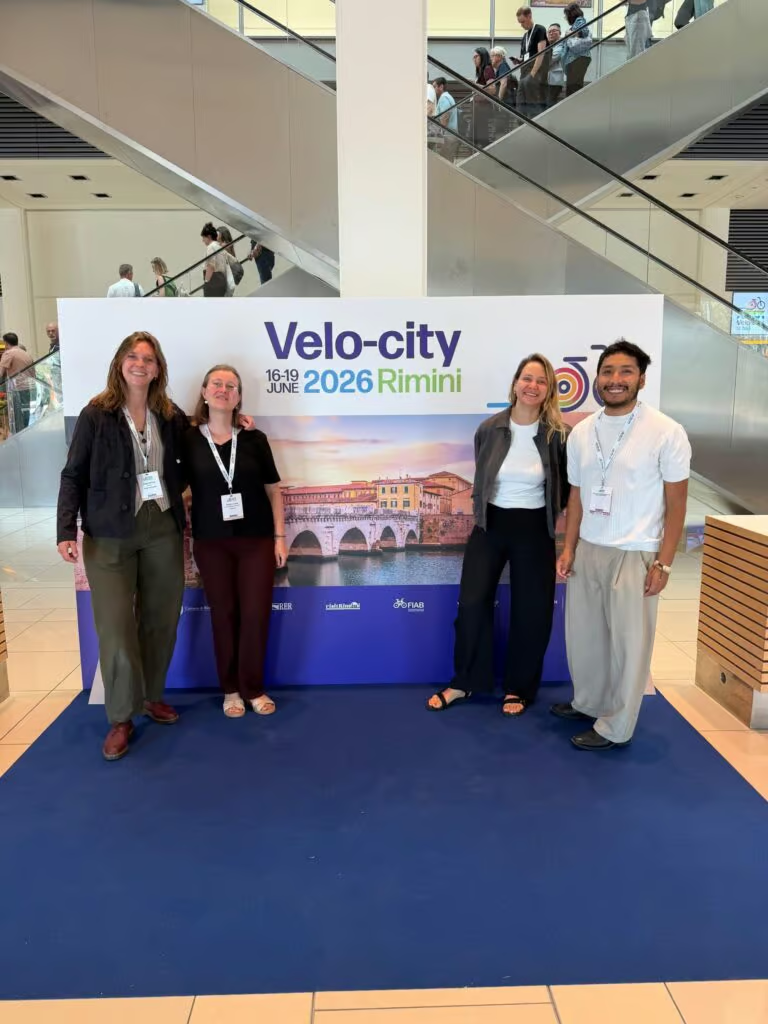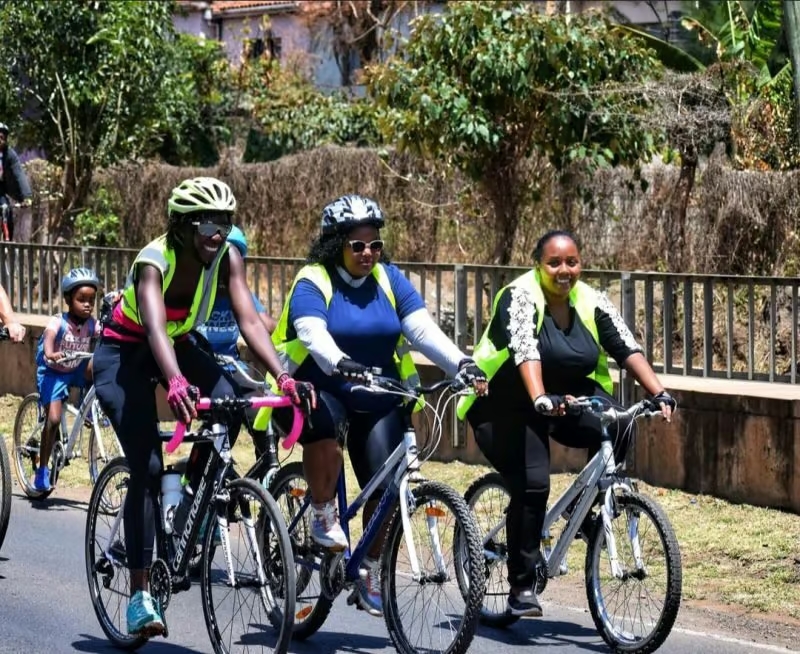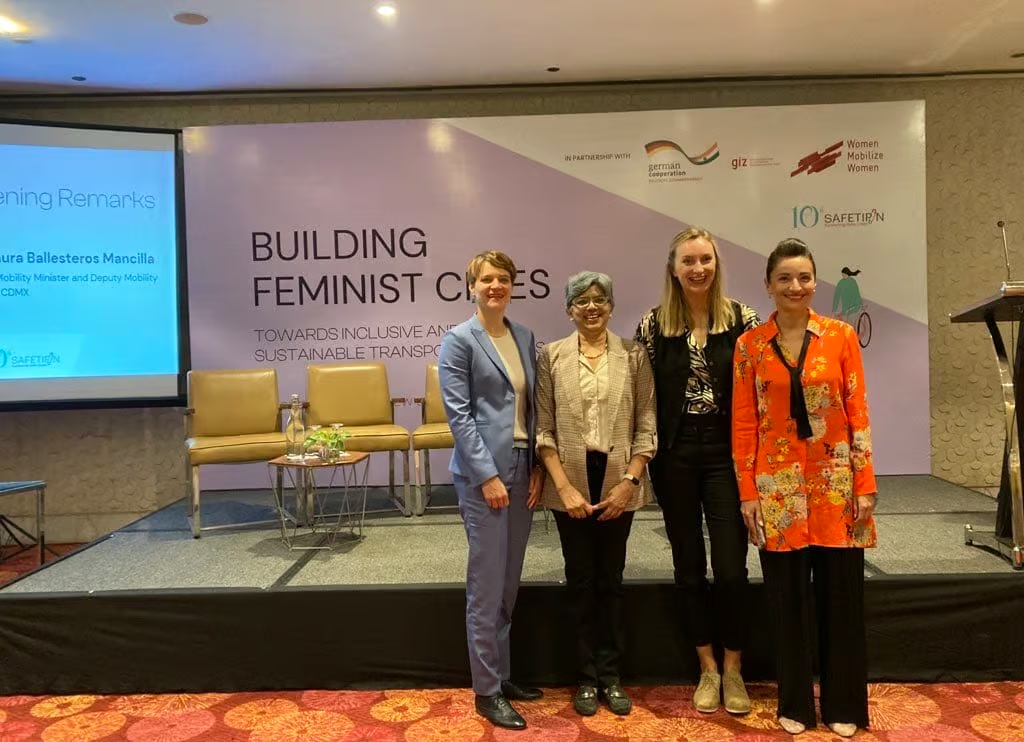
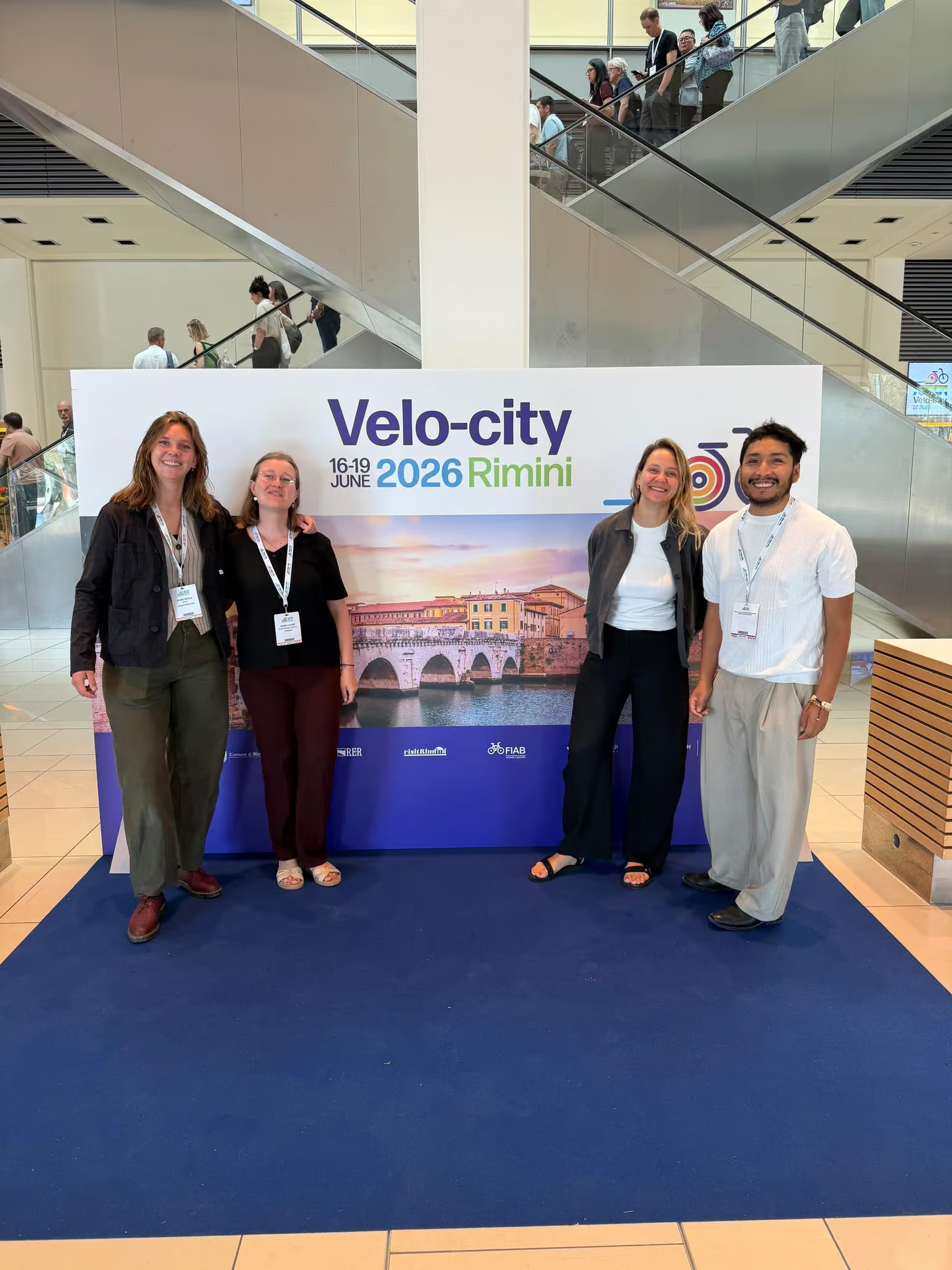
Remarkable Young Voices in Transport at Velo-city 2026 in Rimini, Italy.
What does it take to build a cycling city?
For four Remarkable Young Voices in Transport attending Velo-city 2026 in
Rimini, the answer extended far beyond bicycle lanes. Across conference
sessions, debates, informal conversations and shared rides, cycling emerged
as a question of public space, political courage, community, justice and
dignity.
Romee Nicolai, Maren, Jeffrey and Iden Petraj came to Rimini from Amsterdam,
Addis Ababa, Lima and Tirana. Their cities represent very different cycling
contexts, but their reflections reveal a shared lesson: there is no single
blueprint for becoming a cycling city. Every city has something to learn,
something to question and something to change.
There is no finished cycling city
Coming from Amsterdam, Romee is accustomed to working in a city that is
internationally recognised for cycling. Yet Velo-city reminded her that
experience does not mean the learning process is complete.
The conference gave her an opportunity to step outside her own perspective
as a cycling advocate and exchange ideas with policymakers, researchers and
practitioners working in cities where the challenges and opportunities for
cycling are very different.
She experienced this directly during the interactive session
“Fatbikes in Focus”, where participants took part in a
simulated city hall debate. Rather than focusing only on one type of bicycle,
the discussion raised broader questions about speed, street design, public
space and how cities should respond to changing mobility patterns.
A strong cycling culture does not eliminate debate. It gives cities a
stronger foundation from which to keep learning and adapting.
Streets evolve, behaviours change and new tensions emerge. Cycling policy
cannot remain static. Cities need spaces where residents, professionals and
decision-makers can discuss not only how people move, but also how limited
public space should be shared.
Community moves the cycling movement forward
For Maren, Velo-city was also a reminder that mobility transformation is
built through relationships.
Meeting professionals whose work she had previously followed online was
inspiring. Yet some of the most meaningful moments took place outside the
formal programme: sharing meals, exploring Rimini by bicycle, supporting
fellow young professionals during presentations and celebrating together.
These experiences demonstrated something that infrastructure plans can
overlook. The cycling movement is sustained not only by policies, technical
knowledge and physical investments, but also by communities that encourage
one another, exchange ideas and continue advocating when progress is slow.
Coming from Addis Ababa, where cycling is only beginning to gain wider
recognition as a form of everyday transport, Maren had imagined that
countries such as the Netherlands and Denmark had already solved most of
their cycling challenges.
Instead, she discovered that even leading cycling nations continue to
advocate for safer infrastructure, stronger policies and greater public
awareness. A cycling city is therefore never truly finished. Progress
requires continuous attention, learning and political commitment.
Small changes can unlock everyday cycling
Large infrastructure projects often dominate mobility discussions. One of
Maren’s most practical takeaways, however, concerned something much simpler:
safe and accessible bicycle parking.
Addis Ababa has space for bicycles, but people may still decide not to cycle
when they have nowhere secure to leave one at their destination. The barrier
is not always a lack of physical space. It can also be the absence of secure
facilities or a lack of willingness among institutions and building managers
to accommodate bicycle parking.
Providing secure bicycle parking may appear to be a small intervention, but
it can determine whether cycling becomes a realistic everyday option.
A bicycle lane alone does not complete a journey. People also need safe
places to leave their bicycles when they arrive.
Making cycling practical means addressing the details that shape daily
decisions at schools, workplaces, homes and public buildings.
Cycling is a question of justice and dignity
For Jeffrey, the message that stayed with him most was that cycling is not
simply a transport or infrastructure issue. It is also about justice, health,
care and dignity.
Coming from Lima, where cycling infrastructure remains fragmented and road
safety is a daily concern, he connected the discussions in Rimini to the
urgent realities facing people who cycle in his city.
Safe cycling cannot be treated as a secondary urban issue. It protects lives,
expands access and enables people to move without fear. When safe routes are
incomplete or disconnected, the burden is not distributed equally. People
with fewer transport alternatives are often exposed to the greatest risks.
Transforming this reality requires more than technical plans. It requires
long-term funding, political courage and genuine dialogue with communities.
The question is not only whether a city provides cycling infrastructure,
but whether different people can use it safely, independently and with
dignity.
Emerging cycling cities belong in the global conversation
Iden brought Tirana’s experience into three connected discussions at
Velo-city: Young Professionals in Mobility, Women Changing Cities and
Enabling Cycling for Young Citizens.
Together, these conversations highlighted that building a cycling city is
not only a technical challenge. It also requires inclusive leadership,
opportunities for younger generations and recognition of women as
professionals and urban change-makers.
For an emerging cycling city such as Tirana, participating in an international
exchange is especially valuable. It creates an opportunity to learn from
experiences across continents while also ensuring that cities still
developing their cycling cultures can contribute their own knowledge to the
global discussion.
Sharing Tirana’s journey was therefore not only about presenting progress.
It was also about making the experiences, ambitions and challenges of an
emerging cycling city more visible.
“Better cities are built through collaboration, courage, and people who
believe change is possible.”
Iden left Rimini inspired, energised and full of new ideas to bring home.
Her reflection demonstrates why international platforms become stronger when
they create space for voices from a wider range of cities and regions.
Young people and women must shape mobility
Youth leadership and inclusive representation were recurring themes across
all four reflections.
Romee, Maren, Jeffrey and Iden contributed to the Young Professionals in
Mobility session, facilitated by the Dutch Cycling Embassy. The exchange
created a space for young professionals from different parts of the world to
share experiences and recognise the challenges they have in common.
Although their local contexts differ, they are confronting similar
questions. How can cycling become safer? How can policymakers move from
commitments to implementation? How can communities influence the future of
their streets? And how can younger professionals gain genuine influence over
mobility decisions?
The discussions on women changing cities added another important dimension.
Women and young people should not only be invited to attend mobility
conversations. Their experience, expertise and leadership must influence
what cities decide to do next.
Participation is not enough. Diverse voices need the space, resources and
decision-making power to shape mobility systems.
From inspiration to local action
The value of an international conference is not measured only by what
participants learn while they are there. It is also reflected in what they
carry home and turn into action.
Romee: creating spaces for dialogue in Amsterdam
Over the next six months, Romee will create more spaces for dialogue on the
future of cycling. She plans to bring together young people, citizens,
policymakers, researchers and practitioners to explore how cycling can
contribute to safer, more inclusive and people-centred cities.
Maren: bringing bicycle training into schools in Addis Ababa
Maren will work with local partners and the cycling community to organise
bicycle training sessions in schools. The aim is not only to teach children
how to ride, but also to help them cycle safely and confidently in their own
environment.
By introducing cycling from an early age, she hopes to strengthen children’s
independence, road-safety awareness and confidence while helping a new
generation see bicycles as a normal and valuable part of everyday life.
Jeffrey: strengthening youth-led advocacy in Lima
Jeffrey will strengthen youth-led cycling advocacy through community mapping,
public storytelling and dialogue with local authorities.
Together with Red por la Convivencia Vial, Pedalea Seguro, young volunteers
and local cycling allies, he will advocate for safer, better-connected and
more inclusive cycling infrastructure.
Iden: bringing international learning back to Tirana
Iden returned from Rimini with new ideas from cities and professionals across
different continents. Her next step is to carry this learning into Tirana’s
continuing cycling journey and strengthen the connections between inclusive
leadership, opportunities for young citizens and practical urban change.
What Rimini showed us
Velo-city 2026 showed that cycling transformation is not a journey from an
“unsuccessful” city towards one finished model. It is a continuous process of
learning, questioning and adapting.
Amsterdam must continue negotiating changing mobility patterns and the future
of public space. Addis Ababa can unlock cycling through practical measures
such as secure parking and school-based learning. Lima must connect
fragmented infrastructure and recognise road safety as a matter of equality
and dignity. Tirana demonstrates why emerging cycling cities must be visible
within international mobility discussions.
No city has all the answers. But cities can learn from one another.
When young professionals are given space to exchange experiences, challenge
assumptions and turn ideas into local action, international dialogue becomes
more than a conference conversation.
The streets may be different, but the ambition is shared: cities where
everyone can move safely, confidently and without fear.