Building Feminist Cities was launched with a successful workshop in Delhi, India, co-hosted by Women Mobilize Women (WMW) and Safetipin in October 2023. This event series aims to foster a diverse, global community dedicated to creating more feminist, resilient, and adaptable transport systems capable of handling increasing societal and climate challenges.
The second Building Feminist Cities workshop was held at the Asian and the Pacific Transport Forum 2024 in Manila. Over two sessions, we explored what it means to develop truly inclusive, sustainable transport systems for the 21st century.
Session 1: “Looking at the Intersections of Inclusivity”
A panel of four experts from diverse backgrounds led a discussion on the role of intersectionality in urban mobility planning. Participants from around the globe engaged in exploring the importance of considering care work, planning for people with varied needs and backgrounds, and creating policies that ensure equitable access for all mobility users and workers.
Session 2: Jane’s Walk
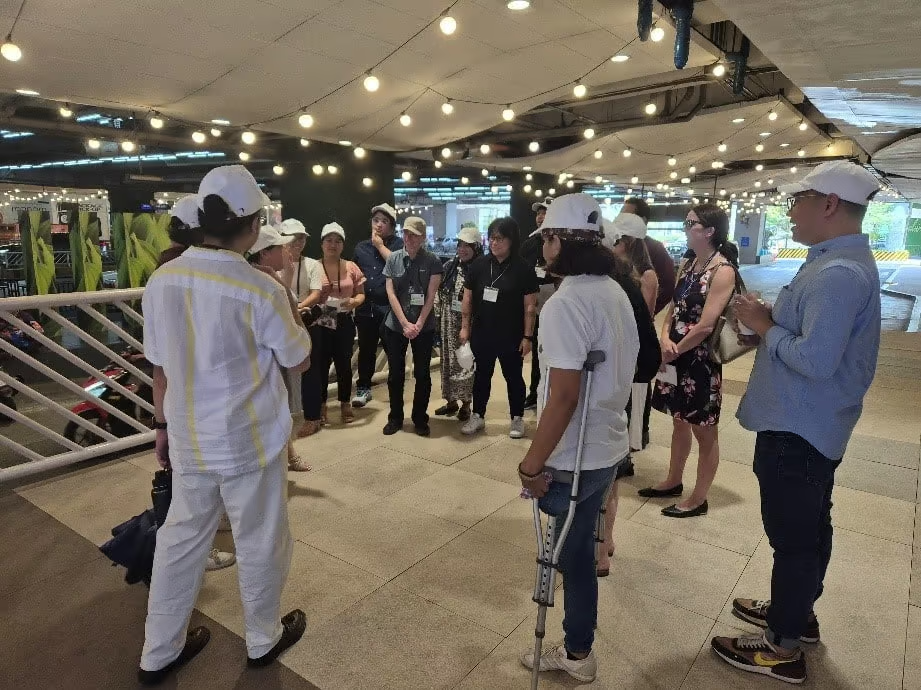
Inspired by urbanist Jane Jacobs, Jane’s Walk is a global movement of free, community-led walking tours. During this event around the ADB HQ in Manila, over 60 participants observed their surroundings and reimagined a more inclusive city for everyone, regardless of age, gender, ability, socio-economic status, race, and background. AI-generated postcards sparked participants’ imaginations during the walk. The session concluded with feedback on different walking experiences in Metro Manila, emphasizing the need for better and more inclusive transport.
Thanks to the positive feedback, the next two Building Feminist Cities workshops are already confirmed for this year and will take place in Brasilia and Nairobi.